The Essential Water Heater Maintenance Checklist
Your water heater is easy to ignore, but it needs routine care to run smoothly and keep your energy bills in check. Follow this water heater preventive maintenance checklist for homeowners to keep the hot water flowing. If you don’t feel comfortable with any of the tasks or run into problems, our plumbers are just a phone call away.
Safety Precautions Before Getting Started
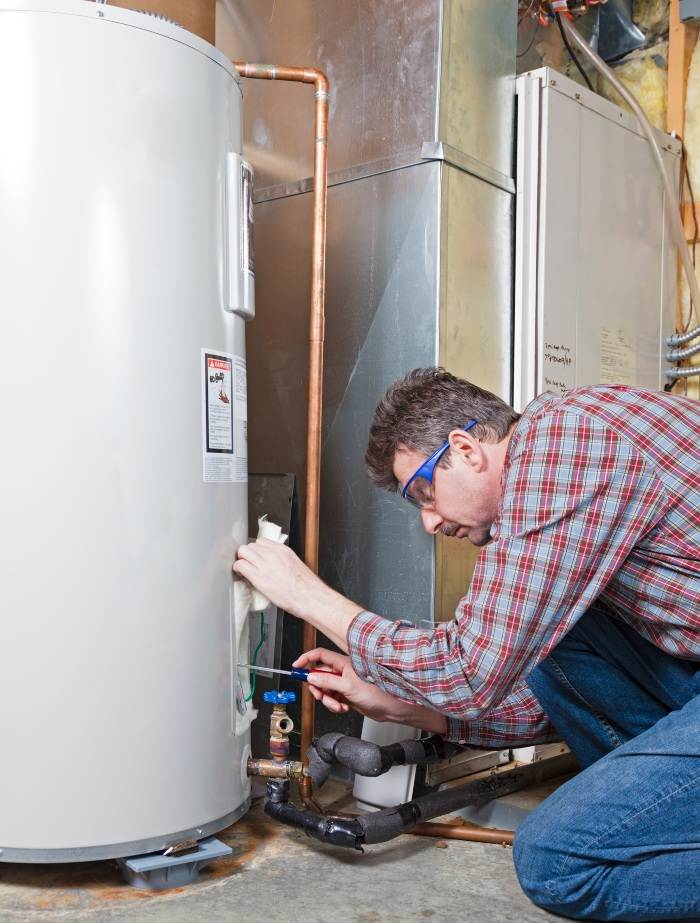
Water heaters involve hot water, high pressure, and natural gas or electricity. Keep yourself safe with these precautions:
- Turn off the power: For gas units, set the gas valve to pilot mode. For electric models, switch off the electricity at the breaker.
- Shut off the water supply: Locate the cold water inlet valve above the tank and turn it off.
- Let the tank cool: Hot water can cause scalding, so give it a few hours to cool before draining or inspecting the tank.
- Protect your hands and eyes: Wear gloves and safety glasses to guard against debris and splashes.
- Pay attention to gas odors: If you notice a rotten egg smell, stop immediately and contact a professional.
Water Heater Maintenance Checklist
Water heater maintenance is a DIY task many homeowners can manage themselves. You don’t need special tools or training, just a bit of time and a clear set of instructions. Here’s what to do:
- Inspect for leaks: Check around the base for standing water. If you spot moisture, tighten nearby connections or fittings to see if that fixes the problem. You may need a plumber’s help if tightening doesn’t correct the leak.
- Flush the tank: To flush out sediment, first connect a garden hose to the drain valve. Run the hose outside or to a nearby drain and open the valve. Let the water flow until it runs clear. This step alone makes a noticeable difference in water heater performance.
- Test the temperature and pressure relief (T&P) valve: Lift the valve lever near the top of the tank. A little water should trickle out. If that doesn’t happen, or the valve fails to snap back, it may need to be replaced.
- Check the anode rod: This rod attracts corrosion to prevent your tank from rusting. You’ll usually find it under a hex-head bolt on the top of the unit. Remove it and inspect for heavy wear. Replacing the rod every three to five years extends the life of your system.
- Adjust the temperature setting: Keep your thermostat around 120 degrees F. This setting reduces scalding at the tap without promoting microbial growth in the tank.
- Schedule annual water heater maintenance: If anything feels off during your inspection, or you prefer a hands-off approach, schedule a professional visit. A plumber can deep clean the tank, replace worn-out parts, and conduct safety checks for your peace of mind.
Keep the Hot Water Flowing
Consistent water heater maintenance protects your system, reduces stress, and prevents costly repairs. Choose Expert Plumbing Service for your next visit and benefit from our 30+ years of experience. Our licensed, certified plumbers handle routine maintenance, complex repairs, and tankless water heater services. Contact us today to request a visit in DuPage, Will, Kendall, or Kane County.
Request Your Expert Plumbing Service Today
