Types of Backflow Preventers
Clean water entering your home or business should never cross paths with the wastewater flowing out. A backflow preventer’s job is to block dirty water from reversing course into your supply line. Whether you’re planning a new backflow preventer installation or just curious about what keeps your drinking water safe, you’ll find the answers here.
What Is Backflow Testing?
Backflow happens when the system pressure drops, allowing contaminated water to sneak into your supply line. Regular testing ensures your backflow preventer valve is working correctly. The goal is to catch small problems before they lead to health issues or code violations.
Using gauges and tools, a licensed plumber examines pressure levels and valve responses. If your system isn’t holding back contamination, the test will catch it. Many municipalities require annual checks. Even if yours doesn’t, it’s still smart to schedule regular tests as a form of cheap insurance against a very unpleasant surprise.
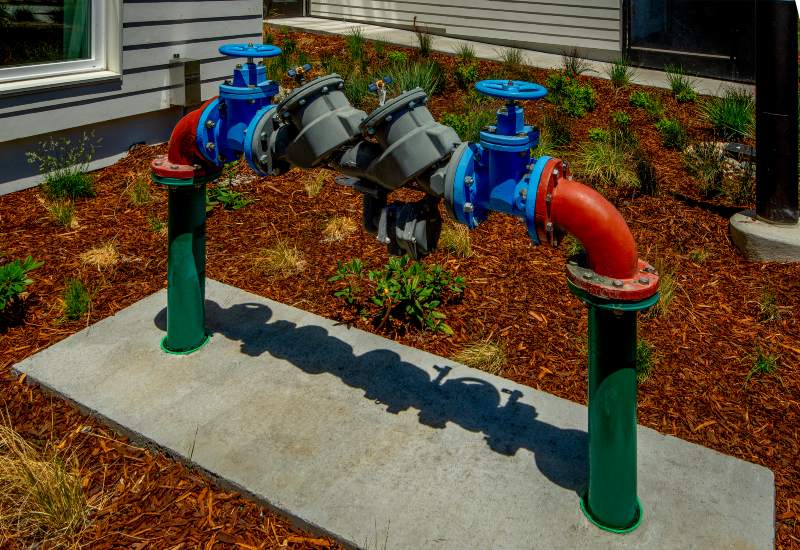
Different Types of Backflow Preventers
Plumbing systems vary, and so do the types of backflow preventers that keep them safe. The type you need depends on the potential hazards and system pressure.
Air Gap
This is the simplest and most reliable method, but it doesn’t work everywhere. It’s not a device—it’s just an air gap, such as the one found between your faucet and the top of the sink. Water can’t backflow if it can’t reach the spout.
Atmospheric Vacuum Breaker
An atmospheric vacuum breaker backflow preventer stops water from flowing in reverse by allowing air to enter if it detects negative pressure. It’s inexpensive and easy to install. The only catch is that it can’t be used in systems under continuous pressure.
Pressure Vacuum Breaker
This upgrade includes a spring-loaded check and air inlet valve to handle constant pressure. It’s often used on sprinkler systems, especially where water could siphon back from treated lawns. A pressure vacuum breaker is more durable than an atmospheric vacuum breaker and includes test ports for inspections.
Spill-Resistant Vacuum Breakers
Similar in function to pressure vacuum breakers, these assemblies are built to minimize water discharge during testing or operation. This makes them ideal for indoor use or areas where a leak could cause trouble. They offer solid protection against backflow but aren’t suitable for high-hazard zones.
Double Check Valve Assembly
As the name suggests, the double check valve assembly uses two check valves for added protection. If one fails, the other kicks in. It’s great for fire sprinklers, commercial irrigation, or industrial systems with moderate risk.
Reduced Pressure Zone
A reduced pressure zone assembly is the go-to for high-risk environments. It uses two check valves with a relief valve in the middle. If pressure shifts or one valve fails, the relief valve opens and dumps contaminated water safely. This model costs more but delivers the highest protection available for medical, chemical, or food-related systems.
Choose Expert Plumbing Service
With more than 100,000 plumbing jobs completed over the past three decades, Expert Plumbing Service is well-qualified to test and install backflow preventers. Our licensed, family-owned company knows how to keep your water safe. Contact us today to schedule backflow preventer installation or testing in DuPage, Will, Kendall, or Kane County.
Request Your Expert Plumbing Service Today
